If you enjoyed listening to rap music then there will come a time when you think “I wonder how difficult it is to produce your own music?”, maybe you have already thought about it?


Well a lot of people get to this stage and start looking up some information on how to do this.


Then you start to find that it can cost quite a lot for the equipment that you will need, on top of that there’s a lot more than what you think goes into the sampling and the recording of the beats that you hear.


So you’ll probably have to do some swatting up on music production as well!


A lot of us are not in a position to start forking out for a fully functional recording studio, so if this sounds where you are at the moment I have some good news for you.


There’s a software package that has been released called Dub Turbo and basically it is the first online DAW which stands for digital audio WorkStation.


So in essence it is like having a complete recording studio on your computer.


Is packed with thousands of beats that you can use, and contains everything that a real recording studio does!


You have drum kits, keyboard, samplers, sequencers and loads more...


It is also been made and designed for the complete beginner so no matter what level you are you can get up and running with Dub Turbo in under 1 hour!


You can even burn your new music on to CD and take it with you to impress friends or listen to in the car!


See how easy is to make hip hop music >>


in this article will tell you how you can quickly and easily get started making some beats on your computer. If you have done any research on how to make rap and hip hop beats you will see that although there is the odd forum with a few bits of advice, there is not really a step by step guide for the newbie to get started.


This is because mostly to make the sort of beats that you hear in your favorite tunes you would need a recording studio to get the same king of quality.


This is where you can run into problems, of course if you have the money and the time to learn all about music production then it could be the start of your new favorite hobby, however sadly alot of us are not in that position.


Which leads us to the question: “How can I get started making rap beats fast?”


Well you may be in luck as there is a new software package that is taking the web by storm!


It is called Dub Turbo and the reason that it is proving so popular is because it gives you a complete solution to start making your own beats from home with ease!


If you think of other products on the market for instance you have Cubase, Fruity Loops which are good desktop music studios they will cost you an arm and a leg and you need to know about music production to even get a tune out of them!


Dub Turbo is the first DAW (Digital Audio Workstation) that sites on your desktop and gives you all the functionality of a real recording studio!


You can also make any sort of music that you want!


You can make rap or hip hop, dance music, R&B, drum and bass the possibilities are endless!


Make your first studio quality beat in just 10 minutes >>


If you are interested in making your own music online then you can do is search about and you’ll find a lot of information on how to make rap beats. The problem comes when you realize that to do this and make some good sounding beats you will need a lot of expensive equipment such as a recording studio.


Also the knowledge that you need to be able to produce music can be extensive, and it can leave your head spinning!


Well I have some good news for you!


If you are looking to get started making rap beats there is the perfect solution for beginners and professionals alike.


It is a software package called Dub Turbo and basically this is the equivalent of a DAW (digital audio WorkStation) on your computer.


It has everything you need to start producing your own rap music, hip hop beats and the best thing is that you can create any different style that you want. You can even go further and start creating dance music if you wish.


You will be able to pick from thousands of different samples and put them together, and even add embellishments into the music such as special affects –fade outs, reverb etc...


It even has a fully functional keyboard in the program so you can make an awesome piano backing track as well.


Probably the best thing about Dub Turbo is that it allows the complete beginner to start producing some very cool sounding rap music, or come to think of it any music that you want!


The software package is also fully updated with new beats to pick from every month so your musical creations will never sound stale!


After you’ve made your masterpiece you can even burn it on to CD and take you with you to show to friends, or listen in the car!


Check out Dub Turbo and start making awesome sounding music today >>


For someone who is interested in electronic music and urban beats you’ve probably looked into making your own music online.


If you have a look around you can actually see the a few different flash games and programs that are fun enough to play, a bit like DJ Hero, although when you get down to it you will not be making any real music with these sorts of games.


The truth is that to make good quality music online you will need a proper recording studio, some good samples and also quite a bit of knowledge about music production.


You may also find that you need some expensive equipment as well if you want to do this properly!


Well all of us are not in the position to do this, so if that sounds like you read on, and I will tell you how you can get started making music online.


Of course you can do this using the method above if you have the time and money, but a far simpler solution is to use a program like Dub Turbo.


Dub Turbo is a complete online Digital Audio Workstation and you can use it to create pretty much any sort of urban or electronic beat.


It has thousands of beats to choose from and also you can use the software to put your music together as well.


The best thing about the software is that it enables a beginner to get up and running fast and start learning how to make their own beats, then once you have learnt the basics you can move on and start making some more complex music!


If you ever wanted to make your own tunes then this is the time!


Check out Dub Turbo and learn how to make your own tunes today >>


Artists Join Music Industry's DC Fly-In to Advocate for Music Education

CARLSBAD, Calif., March 6, 2013 /PRNewswire/ -- On March 19 and 20, artists Chad Smith of the Red Hot Chili Peppers and Bernie Williams, former NY Yankee and Latin Grammy-nominated jazz guitarist join leaders of the music instrument and products industry in Washington, D.C. to lobby Congress on the importance of comprehensive music education in our nation's schools.

The National Association of Music Merchants (NAMM) organizes the annual Advocacy Fly-In on behalf of school music education programs in public schools, to promote the benefits that playing music can have for children and teens, and to assure that federal education policy and funding advance access to music learning for all children.

(Photo: http://photos.prnewswire.com/prnh/20130306/LA71913)

Smith, long known for his music-education advocacy efforts adds his voice to NAMM's Advocacy Fly-In and efforts to support music in America's schools. "I am a perfect example of someone who's been musically educated exclusively throughout grade school, middle school and high school by the public school system," the GRAMMY-winning drummer said. "If there hadn't been a music program in my public schools, I would not be where I am today. Every kid – and I mean everyone – needs a chance to learn and grow with music." Smith also works with the Percussion Marketing Council's (PMC) "Percussion In The Schools" program, The Boys Club of Milwaukee, The Collective School of Music, Harlem NYC Jazz, Fender Music Foundation, Little Kids Rock and as an ambassador for Music Drives Us.

Pressure on funding for school music programs continue as many districts struggle with budgets and regulations that force schools to narrow their scholastic offerings at the expense of important core academic subjects, music and arts education.

The issue of music education in schools is also close to the heart of longtime music-education advocate and gifted jazz guitarist Williams, who attended previous NAMM Advocacy Fly-in and has taken up the cause as a national advocate for music education. "As a student, music was available to me in my public school in Puerto Rico. It fostered discipline in me, and the ability to perform under pressure," he said. "A lot of what music taught me led to my success in other areas - including professional baseball. Music has a profound effect on kids, and education must include music and the arts."

According to a Harris Poll, school principals report higher graduation rates in schools with robust music and art programs than do those without programs (90.2% as compared to 72.9%). In addition, those that rate their programs as "excellent" or "very good" have an even higher graduation rate (90.9%). Schools that have music programs have significantly higher attendance rates than do those without programs (93.3% as compared to 84.9%). 

Nearly 30 NAMM Members, executive committee and industry representatives will join Smith, Williams and NAMM president and CEO Joe Lamond for this year's DC Fly-In March 18-20. "NAMM Members envision a world in which every child has a deep desire to learn music and a recognized right to be taught; and in which every adult is a passionate champion and defender of that right," Lamond said. "Our work in Washington seeks to further that aim."

NAMM's annual Advocacy Fly-In gives NAMM Members the opportunity to advocate to their Members of Congress for policy and funding to support music and arts education. This advocacy effort includes one day of preparation at the Kennedy Center and another day of personal meetings with representatives and other influencers. Sessions are preceded by an issues briefing and training, after which NAMM Members hit the halls of the U.S. Capitol and Congressional office buildings to lobby their representatives about the importance of music education and needed changes to assure access for music learning. During the trip NAMM Members are also trained on developing state-level advocacy efforts for music and arts education that they can take back to their communities in time for school budget season.

About NAMM
The National Association of Music Merchants (NAMM) is the not-for-profit association with a mission to strengthen the $16.3 billion music products industry and promote the pleasures and benefits of making music. NAMM's activities and programs are designed to promote music making to people of all ages. NAMM is comprised of approximately 8,500 Member companies located in more than 94 countries. For more information about NAMM or the proven benefits of making music, interested parties can visit www.namm.org, call 800-767-NAMM (6266) or follow the organization on Facebook, Twitter and YouTube.

NAMM Public Relations Director


View the original article here

TastemakerX Introduces Collections, Music Fantasy Leagues, New Personal Listening Experience

SAN FRANCISCO, CA--(Marketwire - Mar 7, 2013) - TastemakerX, the leading social game for music discovery, today introduced a new user experience that spotlights members' music tastes evolving toward a new 'Collections' motif, and delivers a powerful new listening experience powered by Spotify, Songkick, SoundCloud and YouTube. The platform enables fan-powered music discovery via the first Fantasy Leagues platform for music, which is available for private leagues and as a white-labeled platform for partners. The new TastemakerX experience is available immediately; and TastemakerX will host a special showcase at SXSW in Austin, Texas at Speakeasy on March 11, from 9pm - 2am, featuring Lord Huron, The Joy Formidable, St. Lucia and others.

TastemakerX also announced that it has taken on an additional $1.25M in funding from Baseline, True, Guggenheim, and AOL. The new funding will be used to continue to evolve social music discovery via platform innovation and partnerships.

"With exponentially more music being made today than 30 years ago, music discovery has gotten considerably more difficult despite technology's great advances," said Marc Ruxin, founder and CEO, TastemakerX. "Games inspire people to search harder and accumulate more knowledge, and therefore force discovery in new ways. By enhancing the discovery elements of TastemakerX, along with the playback experience, we're coming out of Beta with a product our users can really dig into and expand their music enjoyment."

The TastemakerX platform evolution includes the following features:

Fan-powered music discovery: Algorithms are efficient, but finding new music based on what your community loves is targeted, and fun. TastemakerX has been rebuilt to empower users to dig into new music based on social recommendations. A brand new 'Collections' motif has replaced the pre-existing stock market metaphor: Let the world know you were a fan since before the beginning, and show off your musical and cultural depth! A new listening experience driven by tight integrations with Spotify, Songkick, SoundCloud and YouTube. Spotify playlists generated by your Collection allow you to stream directly via TastemakerX.

TastemakerX is also introducing, for the first time ever, Fantasy Leagues for Music.

"Fantasy sports have proven to be the only successful long-term gamification of anything, ever," said Ruxin. "People join leagues with friends and strangers, and invest tons of time into knowing everything about anyone in a given sport. The forcing function of having to 'make moves' and make trades keeps players sharp and active. TastemakerX is delivering a new experience to compel music fans to be similarly proactive about the music they listen to and the artists they keep up on, not just around the occasional new music itch to scratch. We see this as a game changer for discovery."

For more information and to start using TastemakerX today, please visit www.tastemakerx.com.

About TastemakerX
TastemakerX is a social gaming platform for music fans. The game encourages players to discover new artists, trends and inspiration; listen to playlists of their Collections via Spotify, Songkick, SoundCloud and YouTube; compete in Fantasy Leagues against other tastemakers; and share experiences through geo-tagging, commentary and photo sharing.

TastemakerX was founded in 2011 by Marc Ruxin and Sandro Pugliese and is headquartered in San Francisco, Calif. Investors include Guggenheim Partners, Baseline Ventures, True Ventures, AOL Ventures, Tekton Ventures. Angel investors and advisors include John Battelle, Marc Geiger, Andrew Anker, Mich Mathews, Michael Kassan, Ian Rogers, Paul Bricault, Ted Rheingold and Mike Lazerow.


View the original article here

Apple and Google's huge streaming music gamble


With new streaming music services, Apple and Google would be entering a very saturated industry.


Fortune reported this week that Google (GOOG, Fortune 500) is planning a YouTube subscription music service. Apple (AAPL, Fortune 500) is also reportedly negotiating terms with music labels to add a streaming option to iTunes.


But their would-be competitors already make up an extremely long list: Pandora (P), Spotify, Rhapsody, iHeartRadio, Rdio, Mog, Muve and Daisy are just a small sampling.


"The world does not need dozens of streaming services," says Russ Crupnick, a streaming media analyst at NPD. "There will be tremendous challenges to get some elbow room in the marketplace."


Apple and Google could be well positioned to gain success in streaming music because of the companies' sheer size and brand recognition.


But merely being a household name may not be enough. MySpace has fallen from grace, and Microsoft's (MSFT, Fortune 500) Xbox Music debuted in the fall to mixed reviews. Napster couldn't survive its post-piracy life and sold to rival Rhapsody in December 2011.


The big advantage Apple and Google have is the synergy with device businesses. Both could promote their streaming services as pre-loaded apps on iPhones, iPads, iPods or Android devices.


Still, smaller companies like Pandora and Spotify have already carved out their own impressive subscriber figures. Pandora is the third highest-grossing app in Apple's iTunes App Store, driving significant in-app sales of music and premium services.


Crupnick thinks Apple and Google have a shot at success, but the window of opportunity is closing fast: There will ultimately be between three and five successful streaming services, he says, "and it will be hard to name No. 6, 8, 10, or 25."


Who makes it to that top-five list could depend on which companies can differentiate their services from the crowd.


"The ones who have carved out a niche have done well for themselves," said Paul Resnikoff, the founder and publisher of the trade publication Digital Music News. "The jack of all trades approach usually isn't the best."


For example, Leap Wireless' (LEAP) Muve Music service, available on all Cricket phones, now has 1.4 million subscribers. Leap says Muve is the largest subscription music service in the United States. Pandora, which had nearly 66 million listeners in January, doesn't break out numbers for paid subscribers.


"[Muve is] an amazing grab on a very mobile focused, lower-income marketplace that no one else has tapped," Resnikoff said.


Related story: How Billboard saved the music video


Yet mainstream brands like Google and Apple are unlikely to settle for a niche audience. Marketing relevant music, events and advertisements to users could be a massively successful enterprise -- particularly for Apple and Google, who can easily leverage that information across their various existing services like iTunes and Google's giant advertising business.


Despite the sheer amount of competition in the space, industry experts say the potential revenue opportunity makes the gamble worth a shot for Apple and Google.


"That data is precious," Crupnick said. "If you know what I'm searching for ... you can feed me more ads that are more effective, and inform me about concerts and shows. Anyone who can unlock that could be a screaming success." To top of page


View the original article here

Music & Arts Celebrates 60 Years of Music Advocacy With 'Share Your Passion' Facebook Contest

FREDERICK, MD--(Marketwire - Mar 7, 2013) - Music & Arts, the largest band and orchestra instrument retailer and lesson provider in the country, officially kicks off its 60th anniversary celebration in March by hosting the Share Your Passion Facebook contest. Student musicians ranging from ages 13 to 18 are encouraged to submit a picture and brief description that represents why they are passionate about music. The top eight finalists will be determined through a vote by Music & Arts' Facebook community. A panel of judges will award one winner $10,000 in Yamaha instruments for the winner's school, $2,000 towards a Yamaha instrument and an entire year of lessons from Music & Arts.

"Music is our passion, and has been since the day my father started this company in the basement of our home in 1952," said Kenny O'Brien, CEO of Music & Arts. "Our team feels incredibly lucky to have spent 60 years serving young musicians and music educators, and providing a new platform for musicians to share their own passion is a fitting way to celebrate this milestone."

Musicians are encouraged to visit www.facebook.com/musicandarts, "like" the page and follow contest instructions. Submissions will be accepted until April 1, 2013.

Starting on April 2, fans across the nation will vote to select the top eight finalists. A panel of judges will measure the finalists based on the originality and quality of their photo, description and emotional appeal, and the winning student musician will be announced in early May.

About Music & Arts
Music & Arts, the nation's largest school music company, has served students, teachers and families through retail stores and school representatives since 1952. Based in Frederick, Md., the company specializes in sales and rentals of music instruments, instrument repairs and music lessons -- especially for the beginning and student musician. Music & Arts now has more than 110 retail locations across 22 states.


View the original article here

Music Empowers Foundation celebrates " Music In Our Schools Month" with " Music Teachers Matter" Video Contest and a ...

NEW YORK, March 7, 2013 /PRNewswire-USNewswire/ -- The Music Empowers Foundation revealed its plans today to celebrate "Music in Our Schools Month", an annual celebration, spanning the month of March.  Activities include new grants and a video contest celebrating school music programs and teachers.


As part of the celebration, Music Empowers today announced a first time grant to the Mr. Holland's Opus Foundation.  The Foundation is a California-based not for profit that, to date, has provided musical instruments to over 1,300 schools nationwide, benefiting hundreds of thousands of students.


"We're very grateful to Music Empowers Foundation for giving us this opportunity to put instruments into more kids' hands so they can experience the benefits of playing music," said Felice Mancini, President & CEO, The Mr. Holland's Opus Foundation.  "The music education community is fortunate to have the support of Music Empowers and together we can keep music alive for all children in school."


LIGHTS, CAMERA, ACTION! Music Empowers also announced the kick off of the "Music Teachers Matter" video contest.  For this event, music education supporters can submit short videos, explaining why their local school's music program and its teachers are important and special to them.


All video submissions will be reviewed by a panel of representatives from prestigious music education not for profits including Little Kids Rock and Berklee College of Music's City Music Program.  The school music program selected for the top video will receive a $2,500 grant from the Music Empowers Foundation.


The "Music Teachers Matter" video contest is open to all music education advocates, ages 18 and older.  Videos can be submitted through March 31st and the top video will be announced in early April. 


To enter and learn more about the "Music Teachers Matters" video contest, visit http://musicempowersfoundation.org/music-teachers-matter-2013.html.


ABOUT MUSIC EMPOWERS FOUNDATION


Music Empowers Foundation is a 501 (c) (3) not-for-profit that provides financial support to nonprofits that offer music education programs to communities with limited or nonexistent programs.  Since its inception in early 2010, it has awarded over half a million dollars in grants to organizations such as: Little Kids Rock, Berklee City Music, DonorsChoose.org, Mr. Holland's Opus Foundation, Artists Corps of America and Blackbird Academy of Arts.  For more information on Music Empowers please go to www.musicempowersfoundation.org, become a fan on Facebook, or follow them on Twitter.


ABOUT THE MR. HOLLAND'S OPUS FOUNDATION


The Mr. Holland's Opus Foundation donates new and refurbished musical instruments to underserved schools in an effort to give youngsters the many benefits of music education, help them to be better students and inspire creativity and expression through playing music.  Hundreds of thousands of students across the country have benefited and thousands of instruments have been donated to more than 1,300 school music programs across the country.  More information can be found at www.mhopus.org


View the original article here

Music Review: Various Artists - Balkan Arts 701: Bulgarian Folk Dances

Field recordings are usually made with portable recording equipment in less than what anybody would consider ideal conditions, with the result being less than perfect recordings as far as sound quality is concerned. However, since the earliest days of recording music they have been invaluable tools for preserving the music of cultures all over the world. Music anthropologists in the 19th century used wax cylinders to record everything from Native American singers to Appalachian folk music.


Field recordings of African American blues and gospel music were often most white people's introductions to both genres. Even today, field recordings are playing an invaluable role in ensuring older artists' music is recorded and not forgotten. The Music Maker Relief Foundation has used field recordings to help bring the music of Southern blues artists, who otherwise might have been forgotten, into homes and concert halls around the world. However, field recordings aren't limited to North American music. The Centre for Traditional Music and Dance's archive of recordings is a treasure chest of music from around the world. One of their most interesting collections of recordings were those done in the Balkans during the 1960s and 1970s by Martin Koenig.


His Balkan Arts Centre (the forerunner of the Centre for Traditional Music and Dance) was formed to help keep the music and culture of that region alive. Koenig's original recordings were made into LPs and 45s, which he used to teach the folk dances of the region. However, they were never made available to the public. Now that's all changing. A box of the original vinyl records was found in the Centre and have now been restored. They are being released as a 13-part series of special edition vinyl EPs by Evergreene Music, with the first release being Balkan Arts 701: Bulgarian Folk Dances.


Now don't worry if you don't have a turntable as every EP comes with a code which not only allows you to download the four tracks from the recording, but also gives you access to liner notes, photos, and additional audio files including a recording of an interview with Koeing. In the interview he talks about his experiences recording the music in communist Eastern Europe and why it was important then, and remains important today, that these recordings exist.


Like most field recordings made prior to the digital age, the sound quality of the four tracks aren't the greatest. However there are other compensations. This is music we would have no record of if these recordings hadn't been made. Folk music which encouraged nationalistic feelings or celebrated ethnic differences was strongly discouraged under communist rule in Eastern Europe. An entire generation grew up without knowing the traditional music of their culture. Recordings like these are the only way they have of learning anything about the music and the dances of their people.


Listening to the four cuts, "Zborinka", "Ruka", "Chukanoto", and "Dobrolushko Horo", the first thing you might notice is the similarities between this music and what we call "Gypsy" music. They both have a kind of wild abandonment to them and a heavy reliance on what sound to be stringed instruments. This only makes sense, as Bulgarian folk music would have many of the same influences as other musics from the region. Like their neighbours in Romania, Bosnia, and Greece, Bulgaria was at one point part of the Turkish-ruled Ottoman Empire. You can hear this influence in rather high-pitched skirling noise produced by the combination of a type of bagpipe and the violin.


The next thing you'll probably notice is the lack of anything like a bass line providing an underpinning for the song. Unlike the majority of the music we listen to, which is built around a very distinctive beat, there doesn't appear to be any one instrument responsible for maintaining the song's rhythm. However, by listening closely you do hear the sound of a drum buried very deep in the mix. Whether that's intentional or a result of deficiencies in the recording process is unclear.


However, even without the drum, you'll notice each of the songs has a pattern. Out of what appears to be a sort of free for all, with all the instruments playing leads at the same time, gradually evolves something we can discern as a carefully constructed song with a noticeable rhythm. The secret is to listen to the song as a whole, not the individual instruments, and then you'll be able to hear the song's pulse. This is the engine which propels the dancers who would move to the music.


It might be hard for us to remember this is dance music, as it no way matches our idea of how it should sound. Even those of us familiar with other Eastern European music will feel somewhat lost, as it doesn't have the definite beat of Polish polkas or the Cossack music of Russia. No, this is far wilder, evoking the wind swept hills and crags where the shepherds who created it tend their flocks.


In fact, it's hard to imagine this music ever being recorded in a proper studio setting. It sounds like it needs to be played out in the open air with its skirling notes being allowed to escape into the sky and the mountains. It's made to be played in the village square or on a hillside around an open fire, not in the sterile environment of the recording studio. Thus we discover the real value of field recordings. They not only capture music, they capture the music and its environment like no other recordings can.


The four recordings on Bulgarian Folk Dances aren't, by any stretch of the imagination, high quality. However, they are exciting, exhilarating, and a timely reminder that music used to be played for the sheer joy of making it and the chance it gave us to celebrate living. Listening to the music, it's fun to try and imagine the kind of dancing it encouraged and the people who danced to it. How often have you been able to say that about anything you've heard recorded recently.


View the original article here

Dave Grohl Finds Music 's Human Element — In A Machine

It wasn't much to look at: a nondescript building in the San Fernando Valley with hideous brown shag carpeting on the walls. But from the 1970s on, the Sound City recording studio turned out a ridiculous amount of great music: classic recordings by Fleetwood Mac, Neil Young, Tom Petty, Metallica, Rage Against the Machine and many others.


Dave Grohl and his bandmates in Nirvana were practically unknown in 1991 when they pulled up to Sound City in a rusted white van. But the album that came out of that session, Nevermind, turned rock music on its head.


In his new documentary and accompanying soundtrack, Sound City: Real to Reel, the Nirvana drummer and Foo Fighters founder pays homage to that studio — and its distinctive soundboard — by speaking to and jamming with other musicians whose lives were changed by recording there.


Grohl spoke to All Things Considered host Melissa Block about the making of the film, which serves as a love letter to both a recording environment and the human element of music in the digital age. Hear the radio version at the audio link on this page, and read more of their conversation below.


MELISSA BLOCK: Let's talk about that board. It's a Neve 8028 soundboard and that was the studio console at Sound City. What was so great about it?


DAVE GROHL: Well, you know, that was a great era for recording equipment. The late '60s and the '70s, a lot of this really beautiful equipment was being made and installed into studios around the world and the Neve boards were considered like the Cadillacs of recording consoles. They're these really big, behemoth-looking recording desks; they kind of look like they're from the Enterprise in Star Trek or something like that. They're like a grayish color, sort of like an old Army tank with lots of knobs, and to any studio geek or gear enthusiast it's like the coolest toy in the world. But they're pretty simple. They're not filled with miles and miles of cable and wires — they're pretty simple. And what you get when you record on a Neve desk is this really big, warm representation of whatever comes into it. What's going to come out the other end is this bigger, better version of you. And so it makes you sound real, but it makes you sound really good.


So Sound City had this Neve board, and I think it's the only thing we knew about Sound City when Nirvana went there. We'd never been to the studio; we just picked it because we heard it had this great old Neve desk. So when we came down in that old van and opened the doors to see that the place was a total dump, we were kind of shocked, you know? We had no idea. We'd been rehearsing those songs for months and months in this little barn in Tacoma, Wash. That's where we practiced. And we knew that we had 16 days in the studio to make an album, which, to us, seemed like an eternity. I mean, we were used to recording 16 songs in a day. So this was our big break, in a way. We had signed to a major label — the David Geffen Co. — and we were coming to Los Angeles to make our record. We didn't think that what eventually happened was going to happen but we really took it seriously. So we practiced really hard and came down to Sound City and that short amount of time to make the album. And it really did change my life forever, those 16 days. I don't think I'd be here now if it weren't for that time at Sound City.


When I think about how music sounds, I might think about the room it was recorded in or the microphones that were used. I wouldn't think about the soundboard. How does that work? What does it add?


Well, you know, it's funny. Most people don't take those things into consideration. When they hear an album, they hear the artist or they hear the lyric or they hear the melody. But they don't really think about the environment in which it was recorded, which is so important. It's that thing that determines what the album sounds like.


Every one of these old boards, they all have personality. They all have a different life to them and they all have a different history. It's almost like they have ghosts in them. When we installed the board at my studio, we had to open it up and clean it out. There was like, 40 years of cocaine and fried chicken in that thing.


Beyond that, there's the people that worked at Sound City that kept the room alive, that painted the walls when it started looking too dingy or that did the work on the board when it started to break down — the studio managers and the runners and all of these people. They're just as important to Tom Petty's Damn the Torpedoes or Rick Springfield's Working Class Dog as the artists. I mean, when I talk about the human element in the movie, it goes beyond performance and it goes beyond a performer. It goes all the way down to the people that made sure Sound City kept its doors open.


There's a great moment in the film when you go to interview the actual creator of the Neve — Rupert Neve himself. And he tries to explain the nuts and bolts of what the board does. And you get this big, goofy grin on your face like you have no idea what he's talking about.


I haven't the foggiest notion. I haven't the slightest idea what he was talking about. I think before we even started shooting, I knew that if we had Rupert Neve in the film, we had to ask something so technical that no one would understand, and then subtitle it.


And that subtitle reads, as you're listening to him?


It says, "Doesn't he know I'm a high school dropout?" Or something like that. It's funny, there aren't too many musicians that also moonlight as studio engineers. There's a few — the really brilliant ones. Trent Reznor is one, from Nine Inch Nails. He's a classically trained pianist and an incredible songwriter and composer, but he's also a great engineer. Someone like me, I set up drums and I beat the hell out of them, and my best friend who works at the studio makes it sound really great. So, when I sit in front of the Neve desk — yeah I could probably put a session together. But when Rupert Neve starts getting that deep, technically, I just, I'm lost. I mean, that's why he's Rupert Neve. He's a genius.


For those of us who aren't studio geeks, explain what a console does — how it shapes the music that comes through it.


There's a great example in the film, actually. Butch Vig, who produced Nevermind, is an old friend of mine. I've worked with him for years. He did the last Foo Fighters record. He plays in the band Garbage. He's one of our generation's great producers, and he explains what the board does. It's like a big stereo. You take a microphone and you plug it into the console. You sing into the microphone, the sound goes through the cable, into the desk. And in the desk, you can manipulate the sound by making it brighter, giving it more bass, basically like an EQ on your stereo. Then the sound comes out of the desk and into your tape machine or your Pro Tools unit, and then that's the sound that you get.


Now, different boards do different things to the sound that's coming through them. An old Neve desk does embellish it in a way that makes it sound sort of bigger or warmer. It doesn't change the performance but it does enhance the way that it sounds. You know, it's the difference between listening to an old record on an old stereo versus listening to something off of your iPod. It really suits rock 'n' roll. I think musicians like me are drawn to those older desks, not just because they're legend and lore but also because they do something really specific that is hard to emulate or re-create digitally.


You own this Neve console now; you bought it when Sound City shut down. Why?


About three years ago we were making a Foo Fighters record, and I decided that we should do it in my garage rather than do it at our studio. We have a studio called Studio 606 in the San Fernando Valley — it's not far from Sound City, actually. And we've made a few records here. Other bands come to record here as well. It's a big 8,000-square-foot state-of-the-art studio. But for the last Foo Fighters record, Wasting Light, I thought, "Well, we've made two records here. Let's do something different. Let's do something fun. Let's switch up the environment and create an experience. ... And screw computers, man. Let's go back to tape." That's one of the things that we talk about in the film — the debate of analog versus digital. You know, when you're recording to tape, you usually just settle for what you have. There's not a lot of options to manipulate the performance, and we like that. We like to sound the way we sound. So we decided to do it straight to tape in my garage. But I didn't have any gear up at my house, so I started hunting around for a board.


Someone said, "We should call Sound City. They're selling off the gear in Studio B." I thought, "Oh my God, Sound City's selling gear? That's crazy!" So I called the studio manager — she'd been there for 20 years and I'd always remained close with everyone there. She was really upset because business was bad. They were kind of on their last legs and they were about to close their doors, so they were selling off some of the gear just to pay the rent. And I said, "I don't really know if I want anything from Studio B, but if you guys ever want to sell the Neve in Studio A ... ." She said, " I'd sell my grandmother before I sold that board." Which is the response I knew that I would get. But I said, "OK, well, just so you know, if you guys ever do want to get rid of it, I would be honored to have it." And maybe about five or six months later, I got the call that they were going to close and they were getting rid of the board. I think they had a conversation about who they should sell it to, and somehow they decided that I should be the person to get it. ... So I didn't even ask how much it cost. I said, "Absolutely!" Because I really did imagine this thing was gonna end up in the Hall of Fame.


It was also right around the 20th anniversary of Nevermind. And I thought, "Well, what I'll do is, I'll buy the board and I'll make a short film about being reunited with this recording console 20 years later." I mean, if you consider what that album did to popular music, you have to also consider that this board is part of that. So I thought I would make a short film paying tribute to the board, and it would maybe be a sidebar to all of the other 20th-anniversary attention we were getting for that album. And then the idea just kind of exploded.


The short film became a long film.


I asked Tom Skeeter, the studio owner, to give me a list of all the albums that were made there. And he kind of looked at me like, "Are you out of your mind? That's 100,000 albums, you know." He gave me a short list, and I took that short list and just started blasting out emails to people. "Hi. My name's Dave. You and I have something in common: Sound City. I'm making a documentary about it and I'd like to ask you a few questions." And of the 40 people that I asked to come sit down and talk to me, 40 of them said yes. And that's when I realized, "Oh my God. This is not a short film. This is a movie."


You mentioned when you heard that they were going to sell the console that you didn't ask how much it cost. Do you mind if I ask you how much you paid for it?


I do mind, actually.


You do?


Well, I mean, you'd be surprised. I would have paid $1 million for this board. I really would have because there's some things in life that you really consider to be priceless. And I know that they paid $78,000 for it in 1973, but unfortunately their return wasn't what you would expect. It didn't cost me $1 million. They gave it to me for a really reasonable price and I think that it was — it had less to do with money and more to do with something emotional or the history of our relationship, my relationship with Sound City. So, yeah, I didn't have to sell any cars or kids to get the board.


So as you're sitting in front of that Neve console, does it look like an old friend? Does it look like part of the family?


Yeah, it was one of the great things about having everyone come in here to do these interviews. Whether it was Tom Petty or Lindsey Buckingham or [producer] Chris Goss or [Queens of the Stone Age frontman] Josh Homme, everybody had a story about sitting in front of this board. To talk to a legendary drummer like Jim Keltner, who's played with everyone from Clapton to John Lennon to Ry Cooder — it's kind of a spiritual experience. Or to talk to Trent Reznor about technology. Here's someone who is probably considered the godfather of popular electronic music. He's built a career around the juxtaposition of human beings and machines making music together. Had I never even filmed or recorded any of these conversations, I'd be a better musician for just having them with these people.


The movie revolves around this board and this studio, the conversation's about something a lot bigger: the human element of music. You can still play with each other and collaborate and capture those magical human moments, but we're living in an age where you can manipulate or change any of that to make it sound any way you want. You can make yourself the greatest singer in the world or the best drummer in the world with the aid of technology. So a place like Sound City, which was just a big, beautiful room where you would hit record and capture the sound of the performer — a place like that isn't necessarily in demand anymore.


View the original article here

Buku music fest returns to NOLA with bigger lineup

NEW ORLEANS (AP) -- Hip-hop singer Big Freedia and an entourage of booty-shaking "bounce" dancers are using a Mardi Gras float for a stage when the Buku music festival returns to New Orleans this weekend.

The two-day Buku Music + Art Project, a hip-hop and electronic dance music festival launched last year, is back for a second year, with about two dozen more acts and four stages instead of two.

The festival is being held Friday and Saturday at Mardi Gras World, the huge studio and warehouse on the bank of the Mississippi River where Carnival floats are made. The lineup is diverse, with Scottish-born DJ Calvin Harris, Ohio rapper Kid Cudi, the British electronic music trio Nero, 1980s rap group Public Enemy and dozens of other acts.

Among the locals in the lineup is New Orleans native Big Freedia.

"We're coming to rock the party, and it's going to be beaucoup fun," said Freedia, the openly gay performer whose real name is Freddie Ross. "I'm in my zone on my home turf in New Orleans, and it's going to be crazy."

The self-proclaimed "queen diva" and his dancers deliver a hypersexual show packed with booty-shaking moves to upbeat dance music known locally as "bounce" music. The genre is a fusion of hip-hop and quick, repetitive dance beats with heavy bass. It usually includes call-and-response vocals — a nod to early rap and Mardi Gras Indian roots music.

"The Mardi Gras Indians, they did the call and response first," Freedia said. "They were around way before the rappers, and that's why bounce is such a big part of our culture here. This is our roots."

Freedia, who takes the stage on Saturday, is one of the few bounce artists with international exposure, having toured Europe, Australia and other countries as well as most of the U.S. He has a documentary and full-length album in the works.

Earlier this week, he shot the video for his latest single, "Explode."

"A lot of things are happening," Freedia said, adding that Hurricane Katrina and the subsequent levee failures in 2005 brought attention to the city's music scene and the bounce genre.

"I had put in my time working in club after club after club for years, and when Katrina hit, it was time for me to see the world," he said.

Buku opens Friday with Primus 3D, Zedd, Aeroplane, Flying Lotus, DJ Soul Sister, Kid Cudi and more than a dozen other acts. Joshua Steele, the British DJ who goes by the stage name Flux Pavilion, said he'll be playing jams from his new album, "Blow the Roof," when he takes the stage Friday.

"I play what makes me happy, what gets me up and jumping around," he said.

Flux Pavilion, whose hits include 2011's "Bass Cannon," delivers high-energy shows that "mix it up a lot, to keep it interesting," Steele said.

"As an artist, you can do whatever you want with bass music, and that's the beauty of it," he said. "It's whatever the producer wants it to be. It can be samba, hip-hop, heavy metal, anything really. You can go anywhere with it."

The Internet has increased accessibility to electronic music, diminishing the genre's "underground" image, Steele said.

"It's a free platform, an open database, where you can just go find it for yourself," he said.

Dante DiPasquale of Winter Circle Productions, the New Orleans-based company producing Buku, said although the festival is bigger than last year, it is intentionally being kept small in comparison to other music festivals. There are only 10,000 tickets available for each day, he said.

Mardi Gras World adds to the "only in New Orleans" experience, he said.

"This festival is really paying tribute to New Orleans, to what people in New Orleans and in the South are listening to," he said. "The rooted music, the jazz music, it's important, but the up-and-coming DJs, bounce artists and indie bands are driving the music today."

The festival's inaugural year featured about 30 acts on two stages. This year there will be more than 50 acts on four stages — one set up among the Carnival floats and props at Mardi Gras World, another in a nearby ballroom and two outside on the banks of the Mississippi River.


View the original article here

The Feed's Friday Music Round-Up: Upbeat edition - CBS News

By Will Goodman Topics Viral Video

(CBS News) While it may be snowy outside if you're in the Northeast like your blogger here, things are about to get nice and hot here on The Feed, because it's time for the Friday Music Round-Up! I decided this week that I need to project some positive thoughts out there on the world, and so have gone with an upbeat edition for the music. (Which actually ended up being a whole lot trickier than I originally anticipated.) We kick things off with Frank Turner's new single "Recovery" above.

I honestly can't get enough of this music video since watching it, and think it's an amazing first entry for an obviously very talented musician that I'll be watching. Really great job, Frank! 

And up next, two major hit songs (one old and one new) recently got an amazing, music mashup performed live during the Australian radio show "Fifi and Jules". Watch Ed Sheeran and Passenger absolutely kill it with their take on "No Diggity" and "Thrift Shop" below.

This next one was definitely the trickiest to select. It seems that when you go for a more artistic mix of sights and sounds in music videos, they tend to be a bit more... serious? Depressing? Sad? (Something along those lines.) But after a long search, I think I was able to find the perfect mix of music and visuals to keep our upbeat theme going in the form of Foals' music video for their song "My Number" directed by Us below. Click play to paint, play and listen by numbers.   

Finally, did you know my tastes in music run pretty wide? For instance, I saw Rush perform live not long ago, and they were absolutely amazing! And while 12-year-old Matt Luca, who recently performed at the Port Jefferson Middle School Talent Show, doesn't top them (that would be sacrilege to say!), he does pay them pretty epic tribute in our final video at the bottom. 

Now hold on a second there! (Are you in some sort of big rush?) Like last week, we have a supplemental edition, music bonus for you from my colleague, Casey Glynn, that you can check out by clicking here (link to come) to keep the tunes coming today. On that note, I hope you have a wonderful weekend and keep coming back to The Feed for all your viral (and music) video needs!


View the original article here

'The Music of Prince' Tribute at Carnegie Hall - New York Times

Chang W. Lee/The New York TimesThe Music of Prince Bilal performing during this tribute at Carnegie Hall on Thursday evening, the ninth annual benefit concert in a series that raises funds for children’s music programs. More Photos »

One concert could hardly contain the multiplicity of Prince’s enormous songwriting catalog over the 35 years since he released his debut album, “For You,” in 1978. “The Music of Prince,” a tribute concert on Thursday night at Carnegie Hall, tried hard. The program strove to capture a broad swath of Prince’s work, through funk and rock and pop, from lust to spirituality to apocalypse to partying. It included hits, rarities and even some of Prince’s dance moves (but alas, no leaping splits). It was the ninth annual “Music of” concert produced by Michael Dorf, the owner of City Winery, to benefit music programs for underprivileged children.

Arts & Entertainment GuideA sortable calendar of noteworthy cultural events in the New York region, selected by Times critics.

With the Roots as a house band, the lineup included singers clearly influenced by Prince — D’Angelo, Bilal — and diverse admirers, among them Elvis Costello and Bettye LaVette. There were also musicians who had been in Prince’s touring bands, including the saxophonist Eric Leeds, whose group fDeluxe reunites members of a band Prince produced in the 1980s as the Family, and the guitarist Wendy Melvoin, who sat in with the Roots for most of the concert.

At a tribute show, song assignments are nearly as important as the performances themselves, and “Music of Prince” was full of smart choices. Mr. Costello, ever the collector, delivered a Prince song that has only appeared as a bootleg: “Moonbeam Levels,” a yearning, Beatles-tinged rocker. “The Cross,” a song about despair and salvation, was stoked with flamboyant devotion by the Blind Boys of Alabama, a venerable gospel quartet.

Bilal and the Roots turned “Sister” — a punky one-and-a-half-minute ditty about incest from Prince’s “Dirty Mind” album — into an elaborately dramatic mini-suite that kept shifting tempos and genres, sometimes from one line to the next, up to a screeching peak.

The Waterboys, a British band whose anthems show Celtic roots, performed “Purple Rain,” the Prince rocker that rivals any anthem, replacing Prince’s lead guitar with keening electric violin. Kat Edmonson, a singer from Texas, turned a ballad, “The Beautiful Ones,” into an even slower torch song, accompanied only by piano and full of heartache.

Ms. LaVette backdated “Kiss” from funk to a bluesy soul vamp, and gave its sexual swagger her own raspy, staccato signature. Talib Kweli updated the ominous “Annie Christian” — Prince’s song about a murderous sociopath, which calls for a chant of “Gun control!” — to mention the violence involving the former congresswoman Gabrielle Giffords and Sandy Hook Elementary School.

Nina Persson, the Swedish lead singer of the Cardigans, made “Nothing Compares 2 U” — a Prince song that was introduced on the Family’s 1985 album — more forlorn and less tragic than the well-known Sinead O’Connor version. And DeVotchKa pushed “Mountains” from funk toward foot-stomping folk-rock.

There were misfires, too. Applying stolid, folky strumming to “Pop Life” (Citizen Cope and Alice Smith) and to “When Doves Cry” (Bhi Bhiman) deflated both of them, though Mr. Bhiman’s sustained croon revealed the lovers’ quarrel within the song. “Raspberry Beret” (sung by Diane Birch with Booker T. Jones on largely unheard organ) and a funk medley from fDeluxe were lost to Carnegie Hall’s acoustics.

And there was comedy: from Chris Rock and Fred Armisen parodying Prince’s spoken-word moments; from Sandra Bernhard, reaching for high notes as she hammed her way through “Little Red Corvette”; from Princess, the Prince tribute duo of Maya Rudolph and Gretchen Lieberum, who had costumes and moves for “Darling Nikki.”

The finale belonged to D’Angelo, who stepped forward as a soul showman, complete with microphone tricks, for “It’s Gonna Be a Beautiful Night” and “1999.” The Roots kicked up Prince’s post-James Brown funk grooves, and D’Angelo placed his yowls, hoots and exhortations just right, to be joined by the whole lineup during “1999.” It was party time — hitting the energy level where a Prince concert would start.


View the original article here

Country music's women's movement - Washington Post (blog)

There is a cascade of discs from female country singers plotting to dominate annual best-of lists eight months down the road. Kacey Musgraves and Kelleigh Bannen are staging rookie breakouts.

Kacey Musgraves poses near the 9:30 Club in Washington, DC. (Photo by Matt McClain for The Washington Post) Kacey Musgraves poses near the 9:30 Club in Washington, DC. (Photo by Matt McClain for The Washington Post)

Ashley Monroe‘s sophomore album, ‘Like a Rose” is the first great album of the year. Lead Dixie Chick Natalie Maines is returning from exile. And the great Gretchen Wilson has promised —count ’em — three new albums by year’s end. So if you’re already hooked on ABC’s twangy record biz soap opera “Nashville,” why not lean your ear toward the real deal?

Here are a few recent singles from some of those artists.


View the original article here

David Bowie, Justin Timberlake are stars of pop music's spring - Los Angeles Times

Justin Timberlake will release his album "The 20/20 Experience" on March 19. Justin Timberlake
Justin Timberlake will release his album "The 20/20 Experience" on March 19. (Felix Kaestle, Associated Press /March 7, 2013)

The winter hibernation is nearing its end. Bleary-eyed musicians are crawling out of their windowless studios after months — and in some cases, years — of isolated dream-capturing. The bottomless espresso cup awaits, and a queue next to the stereo is stacked high with new sounds.


The spring 2013 pop music season promises grand returns, highly anticipated debuts and assured follow-ups. Early in the season arrive both David Bowie's "The Next Day" and Justin Timberlake's "The 20/20 Experience." Veterans including Bon Jovi, Eric Clapton and Depeche Mode will make a return play at the spotlight; modern-day guitar bands including French rockers Phoenix, pop-rockers Paramore, young guitar genius Marnie Stern and soul-dance group Fitz & the Tantrums will offer new work. Country superstars Blake Shelton, the Band Perry and Kenny Chesney will release new records — and promising young voice Kacey Musgraves might just eclipse them all with "Same Trailer, Different Park."


SPRING ARTS PREVIEW: Art | Pop | Country


Hip-hop? Lil Wayne will make a new argument on his forthcoming "I Am Not a Human Being II," supreme storyteller Ghostface Killah of the Wu-Tang Clan returns, and his food-rapping inheritor Action Bronson will drop new work too. L.A. hip-hop collective Odd Future's founder Tyler, the Creator will try to prove on "Wolf" that his skills can equal his huge personality. Colleague Earl Sweatshirt will offer proof of his promise on his major label debut. Highlights:


David Bowie


Can the artist pull off a season-stealing return after his impressive disappearing act during much of the 21st century? David Bowie, 66, shocked his fan base in February when he announced a new studio album called "The Next Day," his first in 10 years. It's a rich return, filled with the kind of smarts, imagination and drama that has typified his most resonant work. His 26th (give or take) studio album was produced by longtime collaborator Tony Visconti, and their approach on "The Next Day" is heavy with both guitars and nostalgia. The Thin White Duke sings of the stars and cosmos with typical vigor, though the moments of restrained, transcendent beauty are just as convincing.


David Bowie, "The Next Day" (Columbia/Sony), Tuesday.


Justin Timberlake


Back to music after a sabbatical spent acting and starring in "Saturday Night Live" parody videos, pop singer Justin Timberlake's highly anticipated return hasn't been without early stumbles. The first single, "Suit and Tie," was received with deserved ambivalence, though the second, an 8-minute jam called "Mirrors," suggested a return to form. The success of the entirety of "20/20," though, will rest as much on the muscle-bound shoulders of longtime producer Timbaland as on Timberlake. The former chart ruler has been largely absent from the charts of late, so "20/20" will succeed or fail based on the team's unproven ability to gracefully mature as artists. Regardless, JT will no doubt trend for much of the season due to both "20/20" and an impending co-headlining tour with Jay-Z — which makes a stop at the Rose Bowl on July 28.


Justin Timberlake, "The 20/20 Experience" (RCA), March 19.


SPRING ARTS PREVIEW:  Architecture | Dance | Theater


Iceage


Iceage is four young punks from Denmark whose most recent album, "You're Nothing," will scare even the most dismissive of old Discharge and Saccharine Trust fans. Lead singer Elias Rønnenfelt has a terrible voice — awesomely so — and couldn't hit a proper note if his left pinkie depended on it. He grunts as he spits out lyrics and bangs out guitar chords, turns sour at the slightest provocation. Musically, the band's just plain weird; oblong structures keep everything off balance. Skeptical old punks who bemoan an imagined stasis in the music of their youth haven't been to an Iceage show. Live, it's clear that the old stamping ground's secure, and the proof will arrive in Echo Park.


Echoplex, 7 p.m. March 29. $12-$14. attheecho.com


Rokia Traoré


Malian singer Rokia Traoré has an exquisite voice and an even more lovely way around a phrased melody. On her delicately crafted "Beautiful Africa," the French-singing chanteuse offers West African guitar pop, smooth but funky, not soft, suggestive of a more rhythmically dense Sade. It's the kind of record that will prove your musical mettle during an impress-your-friends dinner party, while resting on a yoga mat or during a Sunday morning space-out. "Beautiful Africa," produced by longtime PJ Harvey collaborator John Parish, confirms the album title's truth.


Rokia Traore, "Beautiful Africa" (Nonesuch), April 9.


SPRING ARTS PREVIEW:  Jazz | Classical 


Coachella Valley Music & Arts Festival


This year's two-weekend kickoff to the festival season features headliners Phoenix, Blur and Red Hot Chili Peppers and an undercard that will include 130-odd others. Potential highlights? "Harlem Shake" creator Baauer, Grimes, Nick Cave & the Bad Seeds, Rodriguez, the Postal Service, Wu-Tang Clan, the xx, Lou Reed and New Order. Potential breakouts? Seth Troxler, Tame Impala, Father John Misty, 3BallMTY, DIIV and TNGHT, among others.


View the original article here

Dave Grohl Finds Music's Human Element — In A Machine - NPR

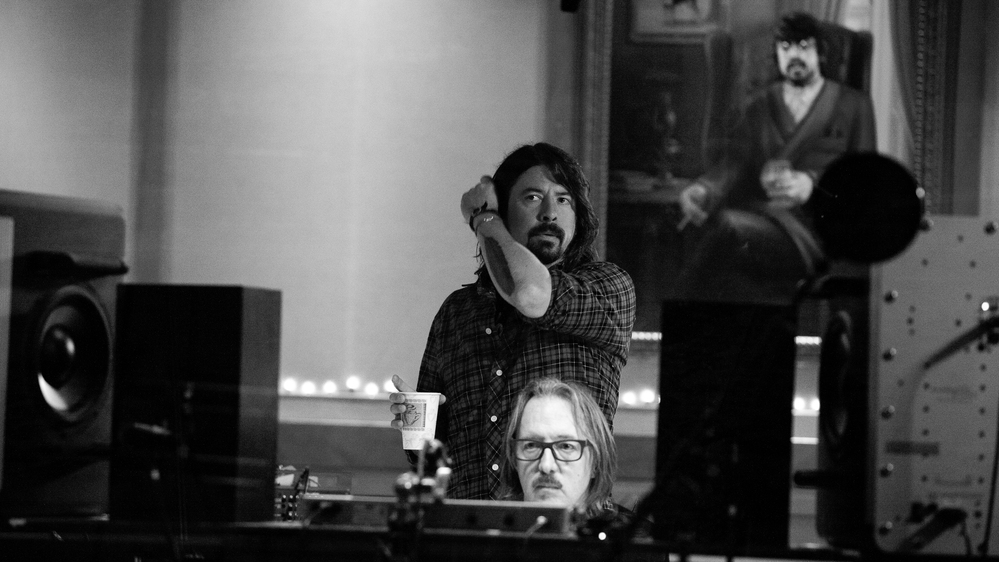
Dave Grohl reunited with his old friend Butch Vig (at console), the producer of Nirvana's Nevermind, for the making of Sound City: Real to Reel.

Sami Ansari/Courtesy of the artist Dave Grohl reunited with his old friend Butch Vig (at console), the producer of Nirvana's Nevermind, for the making of Sound City: Real to Reel. Dave Grohl reunited with his old friend Butch Vig (at console), the producer of Nirvana's Nevermind, for the making of Sound City: Real to Reel.

Sami Ansari/Courtesy of the artist

It wasn't much to look at: a nondescript building in the San Fernando Valley with hideous brown shag carpeting on the walls. But from the 1970s on, the Sound City recording studio turned out a ridiculous amount of great music: classic recordings by Fleetwood Mac, Neil Young, Tom Petty, Metallica, Rage Against the Machine and many others.

Dave Grohl and his bandmates in Nirvana were practically unknown in 1991 when they pulled up to Sound City in a rusted white van. But the album that came out of that session, Nevermind, turned rock music on its head.

In his new documentary and accompanying soundtrack, Sound City: Real to Reel, the Nirvana drummer and Foo Fighters founder pays homage to that studio — and its distinctive soundboard — by speaking to and jamming with other musicians whose lives were changed by recording there.

Grohl spoke to All Things Considered host Melissa Block about the making of the film, which serves as a love letter to both a recording environment and the human element of music in the digital age. Hear the radio version at the audio link on this page, and read more of their conversation below.

MELISSA BLOCK: Let's talk about that board. It's a Neve 8028 soundboard and that was the studio console at Sound City. What was so great about it?

DAVE GROHL: Well, you know, that was a great era for recording equipment. The late '60s and the '70s, a lot of this really beautiful equipment was being made and installed into studios around the world and the Neve boards were considered like the Cadillacs of recording consoles. They're these really big, behemoth-looking recording desks; they kind of look like they're from the Enterprise in Star Trek or something like that. They're like a grayish color, sort of like an old Army tank with lots of knobs, and to any studio geek or gear enthusiast it's like the coolest toy in the world. But they're pretty simple. They're not filled with miles and miles of cable and wires — they're pretty simple. And what you get when you record on a Neve desk is this really big, warm representation of whatever comes into it. What's going to come out the other end is this bigger, better version of you. And so it makes you sound real, but it makes you sound really good.

So Sound City had this Neve board, and I think it's the only thing we knew about Sound City when Nirvana went there. We'd never been to the studio; we just picked it because we heard it had this great old Neve desk. So when we came down in that old van and opened the doors to see that the place was a total dump, we were kind of shocked, you know? We had no idea. We'd been rehearsing those songs for months and months in this little barn in Tacoma, Wash. That's where we practiced. And we knew that we had 16 days in the studio to make an album, which, to us, seemed like an eternity. I mean, we were used to recording 16 songs in a day. So this was our big break, in a way. We had signed to a major label — the David Geffen Co. — and we were coming to Los Angeles to make our record. We didn't think that what eventually happened was going to happen but we really took it seriously. So we practiced really hard and came down to Sound City and that short amount of time to make the album. And it really did change my life forever, those 16 days. I don't think I'd be here now if it weren't for that time at Sound City.

When I think about how music sounds, I might think about the room it was recorded in or the microphones that were used. I wouldn't think about the soundboard. How does that work? What does it add?

Well, you know, it's funny. Most people don't take those things into consideration. When they hear an album, they hear the artist or they hear the lyric or they hear the melody. But they don't really think about the environment in which it was recorded, which is so important. It's that thing that determines what the album sounds like.

Every one of these old boards, they all have personality. They all have a different life to them and they all have a different history. It's almost like they have ghosts in them. When we installed the board at my studio, we had to open it up and clean it out. There was like, 40 years of cocaine and fried chicken in that thing.

Beyond that, there's the people that worked at Sound City that kept the room alive, that painted the walls when it started looking too dingy or that did the work on the board when it started to break down — the studio managers and the runners and all of these people. They're just as important to Tom Petty's Damn the Torpedoes or Rick Springfield's Working Class Dog as the artists. I mean, when I talk about the human element in the movie, it goes beyond performance and it goes beyond a performer. It goes all the way down to the people that made sure Sound City kept its doors open.

There's a great moment in the film when you go to interview the actual creator of the Neve — Rupert Neve himself. And he tries to explain the nuts and bolts of what the board does. And you get this big, goofy grin on your face like you have no idea what he's talking about.

I haven't the foggiest notion. I haven't the slightest idea what he was talking about. I think before we even started shooting, I knew that if we had Rupert Neve in the film, we had to ask something so technical that no one would understand, and then subtitle it.

And that subtitle reads, as you're listening to him?

It says, "Doesn't he know I'm a high school dropout?" Or something like that. It's funny, there aren't too many musicians that also moonlight as studio engineers. There's a few — the really brilliant ones. Trent Reznor is one, from Nine Inch Nails. He's a classically trained pianist and an incredible songwriter and composer, but he's also a great engineer. Someone like me, I set up drums and I beat the hell out of them, and my best friend who works at the studio makes it sound really great. So, when I sit in front of the Neve desk — yeah I could probably put a session together. But when Rupert Neve starts getting that deep, technically, I just, I'm lost. I mean, that's why he's Rupert Neve. He's a genius.

For those of us who aren't studio geeks, explain what a console does — how it shapes the music that comes through it.

There's a great example in the film, actually. Butch Vig, who produced Nevermind, is an old friend of mine. I've worked with him for years. He did the last Foo Fighters record. He plays in the band Garbage. He's one of our generation's great producers, and he explains what the board does. It's like a big stereo. You take a microphone and you plug it into the console. You sing into the microphone, the sound goes through the cable, into the desk. And in the desk, you can manipulate the sound by making it brighter, giving it more bass, basically like an EQ on your stereo. Then the sound comes out of the desk and into your tape machine or your Pro Tools unit, and then that's the sound that you get.

Now, different boards do different things to the sound that's coming through them. An old Neve desk does embellish it in a way that makes it sound sort of bigger or warmer. It doesn't change the performance but it does enhance the way that it sounds. You know, it's the difference between listening to an old record on an old stereo versus listening to something off of your iPod. It really suits rock 'n' roll. I think musicians like me are drawn to those older desks, not just because they're legend and lore but also because they do something really specific that is hard to emulate or re-create digitally.

You own this Neve console now; you bought it when Sound City shut down. Why?

About three years ago we were making a Foo Fighters record, and I decided that we should do it in my garage rather than do it at our studio. We have a studio called Studio 606 in the San Fernando Valley — it's not far from Sound City, actually. And we've made a few records here. Other bands come to record here as well. It's a big 8,000-square-foot state-of-the-art studio. But for the last Foo Fighters record, Wasting Light, I thought, "Well, we've made two records here. Let's do something different. Let's do something fun. Let's switch up the environment and create an experience. ... And screw computers, man. Let's go back to tape." That's one of the things that we talk about in the film — the debate of analog versus digital. You know, when you're recording to tape, you usually just settle for what you have. There's not a lot of options to manipulate the performance, and we like that. We like to sound the way we sound. So we decided to do it straight to tape in my garage. But I didn't have any gear up at my house, so I started hunting around for a board.

Someone said, "We should call Sound City. They're selling off the gear in Studio B." I thought, "Oh my God, Sound City's selling gear? That's crazy!" So I called the studio manager — she'd been there for 20 years and I'd always remained close with everyone there. She was really upset because business was bad. They were kind of on their last legs and they were about to close their doors, so they were selling off some of the gear just to pay the rent. And I said, "I don't really know if I want anything from Studio B, but if you guys ever want to sell the Neve in Studio A ... ." She said, " I'd sell my grandmother before I sold that board." Which is the response I knew that I would get. But I said, "OK, well, just so you know, if you guys ever do want to get rid of it, I would be honored to have it." And maybe about five or six months later, I got the call that they were going to close and they were getting rid of the board. I think they had a conversation about who they should sell it to, and somehow they decided that I should be the person to get it. ... So I didn't even ask how much it cost. I said, "Absolutely!" Because I really did imagine this thing was gonna end up in the Hall of Fame.

It was also right around the 20th anniversary of Nevermind. And I thought, "Well, what I'll do is, I'll buy the board and I'll make a short film about being reunited with this recording console 20 years later." I mean, if you consider what that album did to popular music, you have to also consider that this board is part of that. So I thought I would make a short film paying tribute to the board, and it would maybe be a sidebar to all of the other 20th-anniversary attention we were getting for that album. And then the idea just kind of exploded.

The short film became a long film.

I asked Tom Skeeter, the studio owner, to give me a list of all the albums that were made there. And he kind of looked at me like, "Are you out of your mind? That's 100,000 albums, you know." He gave me a short list, and I took that short list and just started blasting out emails to people. "Hi. My name's Dave. You and I have something in common: Sound City. I'm making a documentary about it and I'd like to ask you a few questions." And of the 40 people that I asked to come sit down and talk to me, 40 of them said yes. And that's when I realized, "Oh my God. This is not a short film. This is a movie."

You mentioned when you heard that they were going to sell the console that you didn't ask how much it cost. Do you mind if I ask you how much you paid for it?

I do mind, actually.

You do?

Well, I mean, you'd be surprised. I would have paid $1 million for this board. I really would have because there's some things in life that you really consider to be priceless. And I know that they paid $78,000 for it in 1973, but unfortunately their return wasn't what you would expect. It didn't cost me $1 million. They gave it to me for a really reasonable price and I think that it was — it had less to do with money and more to do with something emotional or the history of our relationship, my relationship with Sound City. So, yeah, I didn't have to sell any cars or kids to get the board.

So as you're sitting in front of that Neve console, does it look like an old friend? Does it look like part of the family?

Yeah, it was one of the great things about having everyone come in here to do these interviews. Whether it was Tom Petty or Lindsey Buckingham or [producer] Chris Goss or [Queens of the Stone Age frontman] Josh Homme, everybody had a story about sitting in front of this board. To talk to a legendary drummer like Jim Keltner, who's played with everyone from Clapton to John Lennon to Ry Cooder — it's kind of a spiritual experience. Or to talk to Trent Reznor about technology. Here's someone who is probably considered the godfather of popular electronic music. He's built a career around the juxtaposition of human beings and machines making music together. Had I never even filmed or recorded any of these conversations, I'd be a better musician for just having them with these people.

The movie revolves around this board and this studio, the conversation's about something a lot bigger: the human element of music. You can still play with each other and collaborate and capture those magical human moments, but we're living in an age where you can manipulate or change any of that to make it sound any way you want. You can make yourself the greatest singer in the world or the best drummer in the world with the aid of technology. So a place like Sound City, which was just a big, beautiful room where you would hit record and capture the sound of the performer — a place like that isn't necessarily in demand anymore.


View the original article here

SXSW Music Coverage Preview: What Do You Want To Hear? - Forbes

Letter-men: TI, BOB & ZOG @ SXSW 2012.

Last year’s trip to South By Southwest proved to be quite a fruitful one for FORBES’ music business coverage.

With the help our fantastic video team, I brought you branding tips from Kendrick Lamar and Kevin Liles, offered scoops on the value of Lil Wayne’s and Nicki Minaj’s then-new endorsement deals, provided a sneak peek at U.K. sensation Ed Sheeran and took you to the back of the tour bus for an interview with T.I. and B.o.B.

On the entrepreneurial side, I checked in with Songkick’s Ian Hogarth and Monster’s Noel Lee. Additional interviews provided the basis for magazine features on the rise of INGrooves and the business of Skrillex.

I’ll be in Austin again for SXSW’s musical extravaganza this year–and I want to know what you, the readers, are hoping to hear about. So tell me!

Do you want to hear more from artists? More from executives? More from entrepreneurs? What trends do you want to know more about? What didn’t get covered enough last year? What got over-covered last year?  What do people at SXSW want to read about? What do people not at SXSW want to read about? Do people who aren’t at SXSW care at all what happens in Austin?

Please leave me a comment below and I’ll do my best to keep your thoughts in mind as I continue to plan my coverage. And if you know who this year’s Ed Sheeran is–in other words, someone who you think will go from the SXSW showcase this year to the Grammy stage in 2014–please do tell.

For more on the business of music, check out my Jay-Z biography Empire State of Mind and my upcoming book on Michael Jackson. You can also follow me on Twitter.


View the original article here

Apple and Google's huge streaming music gamble - CNN


With new streaming music services, Apple and Google would be entering a very saturated industry.


Fortune reported this week that Google (GOOG, Fortune 500) is planning a YouTube subscription music service. Apple (AAPL, Fortune 500) is also reportedly negotiating terms with music labels to add a streaming option to iTunes.


But their would-be competitors already make up an extremely long list: Pandora (P), Spotify, Rhapsody, iHeartRadio, Rdio, Mog, Muve and Daisy are just a small sampling.


"The world does not need dozens of streaming services," says Russ Crupnick, a streaming media analyst at NPD. "There will be tremendous challenges to get some elbow room in the marketplace."


Apple and Google could be well positioned to gain success in streaming music because of the companies' sheer size and brand recognition.


But merely being a household name may not be enough. MySpace has fallen from grace, and Microsoft's (MSFT, Fortune 500) Xbox Music debuted in the fall to mixed reviews. Napster couldn't survive its post-piracy life and sold to rival Rhapsody in December 2011.


The big advantage Apple and Google have is the synergy with device businesses. Both could promote their streaming services as pre-loaded apps on iPhones, iPads, iPods or Android devices.


Still, smaller companies like Pandora and Spotify have already carved out their own impressive subscriber figures. Pandora is the third highest-grossing app in Apple's iTunes App Store, driving significant in-app sales of music and premium services.


Crupnick thinks Apple and Google have a shot at success, but the window of opportunity is closing fast: There will ultimately be between three and five successful streaming services, he says, "and it will be hard to name No. 6, 8, 10, or 25."


Who makes it to that top-five list could depend on which companies can differentiate their services from the crowd.


"The ones who have carved out a niche have done well for themselves," said Paul Resnikoff, the founder and publisher of the trade publication Digital Music News. "The jack of all trades approach usually isn't the best."


For example, Leap Wireless' (LEAP) Muve Music service, available on all Cricket phones, now has 1.4 million subscribers. Leap says Muve is the largest subscription music service in the United States. Pandora, which had nearly 66 million listeners in January, doesn't break out numbers for paid subscribers.


"[Muve is] an amazing grab on a very mobile focused, lower-income marketplace that no one else has tapped," Resnikoff said.


Related story: How Billboard saved the music video


Yet mainstream brands like Google and Apple are unlikely to settle for a niche audience. Marketing relevant music, events and advertisements to users could be a massively successful enterprise -- particularly for Apple and Google, who can easily leverage that information across their various existing services like iTunes and Google's giant advertising business.


Despite the sheer amount of competition in the space, industry experts say the potential revenue opportunity makes the gamble worth a shot for Apple and Google.


"That data is precious," Crupnick said. "If you know what I'm searching for ... you can feed me more ads that are more effective, and inform me about concerts and shows. Anyone who can unlock that could be a screaming success." To top of page


View the original article here

A Complete Online Recording Studio!


Uf you are looking to make your own rap music online and you do not know where to begin it can be difficult to find a complete solution that will do everything for you.

For instance you run into a few problems such as where am I going get some good quality sound from?

How am I going put them together into a tune?

Well when you start looking into it and all the components that go into proper music production it can work out to be very expensive with all the equipment that you will need!

Well I have some good news!

Dub Turbo has been released and is a complete solution in the form of the software package that gives you access to thousands of beats that you can use, and put together with the software!

In fact having looked at it is a complete DAW (digital audio WorkStation) so you can do everything online that you could do in your own recording studio!

This is the perfect choice for beginners because the video tutorials allow you to get up and running quickly and make your first track in under an hour.

You can then go into more complex components of the software, import your own sounds, and start adding some awesome affects.

As well as that once your musical creation is completed you can burn it on to CD and take it with you!

The software has been getting some rave reviews and provides a complete solution for anybody that is looking into making their own rap music, will come to think of it any sort of urban music!

Check out the awesome video examples today and start making your own tunes fast
       
Click here for more information.

Why There Are So Many Streaming-Music Rumors Right Now - Wired

If you’ve been following the news this week, you could be forgiven for wondering why there have been so many stories about products that don’t yet exist, namely streaming services from Google and Apple. There’ve been so many stories about this because whatever deals are struck will define the music market for quite some time.


Apple and Google are going to upend the streaming business because music has become a commodity. Everyone has more or less the same content. That means streaming services have to sell on pricing plans and features. Too many features and your product gets bloated. Not enough and people embrace your competitor. It’s a tough market, one that’s already chewed up and spit out MOG. The only thing that can cause a shakeup is distribution, and the only companies in the position to do that right now are Google and Apple. That’s why the negotiations are so intense, and why there’s so much behind-the-scenes chatter.


The only reason we know what either of these companies are up to is because somebody leaked. We’ve heard Apple is in on-again, off-again meetings with labels trying to hammer out a price. We’ve heard Apple met with Beats — which has its own streaming service on the way. We’ve heard Google/YouTube is launching at least one (and possibly two!) streaming services, pending label negotiations. Neither company is saying anything, officially. But still the stories come, because labels are compelled to leak negotiations.


The most recent Apple news is a great example. The New York Post reported that Apple wants to pay $0.06 per 100 songs streamed, while Spotify pays $0.35 and Pandora pays $0.12. It makes Apple look cheap, and strong-armish — which could bolster the labels’ position. Following quickly on the heels of that story, The New York Times reported that talks had more or less broken down, and the service is most likely on hold until the summer.


The leaks speak to the power Google and Apple will have in this market. The music industry is applying pressure because these two companies will define the wholesale price of music for years to come. Consider that the iTunes Store launched a decade ago this April, and while pricing and percentage details have changed, the music industry is still doing business on Apple’s terms. Now Apple and Google are in a great position to call the tune again because of something that didn’t exist in 2003: ubiquitous smartphones.


Those two behemoths have more retail storefronts in the form of smartphones than anyone else could hope to muster. Subscription and streaming only took off once 3G made it possible for you to carry your music with you everywhere. Pandora, Spotify, and Rdio have proved there’s an attractive market. But imagine what happens when a streaming-music app ships with your phone, with every phone, and all you have to do is turn it on, using an account you’ve already set up for billing. Or even worse (if you are an existing streaming-music provider) if it’s a free, advertising-supported service.


If Google and Apple do something like this, they are big enough to instantly transform — and own — the marketplace. Especially because both can add value by including apps that run on other platforms and connect to your entertainment center. So maybe the Apple deal is pushed back to this summer. And maybe Apple and Google are going to be late to this game. But no matter when they come in it won’t be too late, because with the right offering, shipping on handsets, running on tablets and desktops and TVs, they’re going to dominate and control it.


The labels may not be the best-run businesses out there, and they’re certainly not the most tech savvy, but even they can see that. So they’re leaking to put pressure on negotiations. Which means you’re going to continue to see a steady drip-drip-drip of details on whatever deal is about to be struck until, suddenly, it all stops. And that’s when you know that something is really on the way: When the stories stop.


View the original article here