Country music's women's movement - Washington Post (blog)

There is a cascade of discs from female country singers plotting to dominate annual best-of lists eight months down the road. Kacey Musgraves and Kelleigh Bannen are staging rookie breakouts.

Kacey Musgraves poses near the 9:30 Club in Washington, DC. (Photo by Matt McClain for The Washington Post) Kacey Musgraves poses near the 9:30 Club in Washington, DC. (Photo by Matt McClain for The Washington Post)

Ashley Monroe‘s sophomore album, ‘Like a Rose” is the first great album of the year. Lead Dixie Chick Natalie Maines is returning from exile. And the great Gretchen Wilson has promised —count ’em — three new albums by year’s end. So if you’re already hooked on ABC’s twangy record biz soap opera “Nashville,” why not lean your ear toward the real deal?

Here are a few recent singles from some of those artists.


View the original article here

David Bowie, Justin Timberlake are stars of pop music's spring - Los Angeles Times

Justin Timberlake will release his album "The 20/20 Experience" on March 19. Justin Timberlake
Justin Timberlake will release his album "The 20/20 Experience" on March 19. (Felix Kaestle, Associated Press /March 7, 2013)

The winter hibernation is nearing its end. Bleary-eyed musicians are crawling out of their windowless studios after months — and in some cases, years — of isolated dream-capturing. The bottomless espresso cup awaits, and a queue next to the stereo is stacked high with new sounds.


The spring 2013 pop music season promises grand returns, highly anticipated debuts and assured follow-ups. Early in the season arrive both David Bowie's "The Next Day" and Justin Timberlake's "The 20/20 Experience." Veterans including Bon Jovi, Eric Clapton and Depeche Mode will make a return play at the spotlight; modern-day guitar bands including French rockers Phoenix, pop-rockers Paramore, young guitar genius Marnie Stern and soul-dance group Fitz & the Tantrums will offer new work. Country superstars Blake Shelton, the Band Perry and Kenny Chesney will release new records — and promising young voice Kacey Musgraves might just eclipse them all with "Same Trailer, Different Park."


SPRING ARTS PREVIEW: Art | Pop | Country


Hip-hop? Lil Wayne will make a new argument on his forthcoming "I Am Not a Human Being II," supreme storyteller Ghostface Killah of the Wu-Tang Clan returns, and his food-rapping inheritor Action Bronson will drop new work too. L.A. hip-hop collective Odd Future's founder Tyler, the Creator will try to prove on "Wolf" that his skills can equal his huge personality. Colleague Earl Sweatshirt will offer proof of his promise on his major label debut. Highlights:


David Bowie


Can the artist pull off a season-stealing return after his impressive disappearing act during much of the 21st century? David Bowie, 66, shocked his fan base in February when he announced a new studio album called "The Next Day," his first in 10 years. It's a rich return, filled with the kind of smarts, imagination and drama that has typified his most resonant work. His 26th (give or take) studio album was produced by longtime collaborator Tony Visconti, and their approach on "The Next Day" is heavy with both guitars and nostalgia. The Thin White Duke sings of the stars and cosmos with typical vigor, though the moments of restrained, transcendent beauty are just as convincing.


David Bowie, "The Next Day" (Columbia/Sony), Tuesday.


Justin Timberlake


Back to music after a sabbatical spent acting and starring in "Saturday Night Live" parody videos, pop singer Justin Timberlake's highly anticipated return hasn't been without early stumbles. The first single, "Suit and Tie," was received with deserved ambivalence, though the second, an 8-minute jam called "Mirrors," suggested a return to form. The success of the entirety of "20/20," though, will rest as much on the muscle-bound shoulders of longtime producer Timbaland as on Timberlake. The former chart ruler has been largely absent from the charts of late, so "20/20" will succeed or fail based on the team's unproven ability to gracefully mature as artists. Regardless, JT will no doubt trend for much of the season due to both "20/20" and an impending co-headlining tour with Jay-Z — which makes a stop at the Rose Bowl on July 28.


Justin Timberlake, "The 20/20 Experience" (RCA), March 19.


SPRING ARTS PREVIEW:  Architecture | Dance | Theater


Iceage


Iceage is four young punks from Denmark whose most recent album, "You're Nothing," will scare even the most dismissive of old Discharge and Saccharine Trust fans. Lead singer Elias Rønnenfelt has a terrible voice — awesomely so — and couldn't hit a proper note if his left pinkie depended on it. He grunts as he spits out lyrics and bangs out guitar chords, turns sour at the slightest provocation. Musically, the band's just plain weird; oblong structures keep everything off balance. Skeptical old punks who bemoan an imagined stasis in the music of their youth haven't been to an Iceage show. Live, it's clear that the old stamping ground's secure, and the proof will arrive in Echo Park.


Echoplex, 7 p.m. March 29. $12-$14. attheecho.com


Rokia Traoré


Malian singer Rokia Traoré has an exquisite voice and an even more lovely way around a phrased melody. On her delicately crafted "Beautiful Africa," the French-singing chanteuse offers West African guitar pop, smooth but funky, not soft, suggestive of a more rhythmically dense Sade. It's the kind of record that will prove your musical mettle during an impress-your-friends dinner party, while resting on a yoga mat or during a Sunday morning space-out. "Beautiful Africa," produced by longtime PJ Harvey collaborator John Parish, confirms the album title's truth.


Rokia Traore, "Beautiful Africa" (Nonesuch), April 9.


SPRING ARTS PREVIEW:  Jazz | Classical 


Coachella Valley Music & Arts Festival


This year's two-weekend kickoff to the festival season features headliners Phoenix, Blur and Red Hot Chili Peppers and an undercard that will include 130-odd others. Potential highlights? "Harlem Shake" creator Baauer, Grimes, Nick Cave & the Bad Seeds, Rodriguez, the Postal Service, Wu-Tang Clan, the xx, Lou Reed and New Order. Potential breakouts? Seth Troxler, Tame Impala, Father John Misty, 3BallMTY, DIIV and TNGHT, among others.


View the original article here

Dave Grohl Finds Music's Human Element — In A Machine - NPR

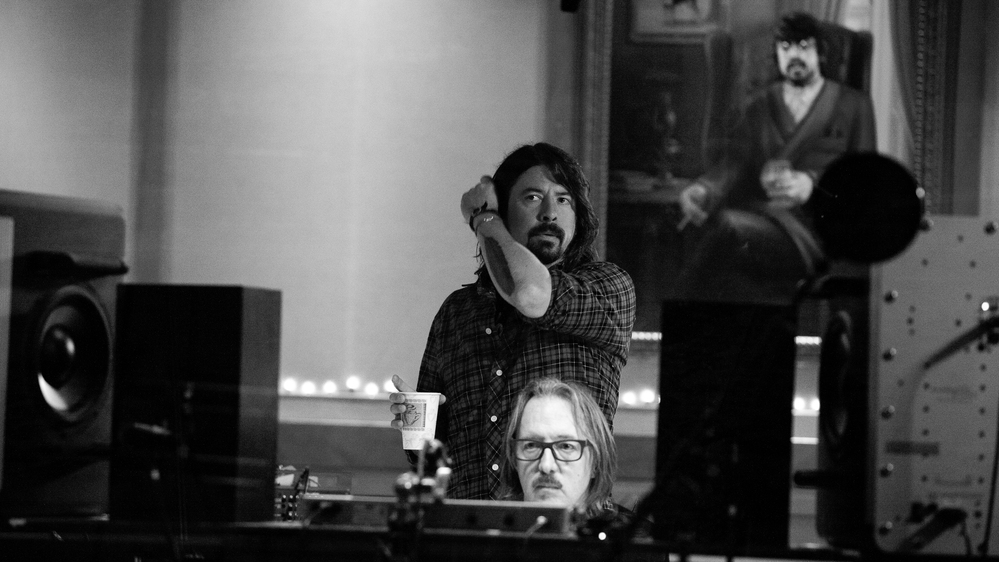
Dave Grohl reunited with his old friend Butch Vig (at console), the producer of Nirvana's Nevermind, for the making of Sound City: Real to Reel.

Sami Ansari/Courtesy of the artist Dave Grohl reunited with his old friend Butch Vig (at console), the producer of Nirvana's Nevermind, for the making of Sound City: Real to Reel. Dave Grohl reunited with his old friend Butch Vig (at console), the producer of Nirvana's Nevermind, for the making of Sound City: Real to Reel.

Sami Ansari/Courtesy of the artist

It wasn't much to look at: a nondescript building in the San Fernando Valley with hideous brown shag carpeting on the walls. But from the 1970s on, the Sound City recording studio turned out a ridiculous amount of great music: classic recordings by Fleetwood Mac, Neil Young, Tom Petty, Metallica, Rage Against the Machine and many others.

Dave Grohl and his bandmates in Nirvana were practically unknown in 1991 when they pulled up to Sound City in a rusted white van. But the album that came out of that session, Nevermind, turned rock music on its head.

In his new documentary and accompanying soundtrack, Sound City: Real to Reel, the Nirvana drummer and Foo Fighters founder pays homage to that studio — and its distinctive soundboard — by speaking to and jamming with other musicians whose lives were changed by recording there.

Grohl spoke to All Things Considered host Melissa Block about the making of the film, which serves as a love letter to both a recording environment and the human element of music in the digital age. Hear the radio version at the audio link on this page, and read more of their conversation below.

MELISSA BLOCK: Let's talk about that board. It's a Neve 8028 soundboard and that was the studio console at Sound City. What was so great about it?

DAVE GROHL: Well, you know, that was a great era for recording equipment. The late '60s and the '70s, a lot of this really beautiful equipment was being made and installed into studios around the world and the Neve boards were considered like the Cadillacs of recording consoles. They're these really big, behemoth-looking recording desks; they kind of look like they're from the Enterprise in Star Trek or something like that. They're like a grayish color, sort of like an old Army tank with lots of knobs, and to any studio geek or gear enthusiast it's like the coolest toy in the world. But they're pretty simple. They're not filled with miles and miles of cable and wires — they're pretty simple. And what you get when you record on a Neve desk is this really big, warm representation of whatever comes into it. What's going to come out the other end is this bigger, better version of you. And so it makes you sound real, but it makes you sound really good.

So Sound City had this Neve board, and I think it's the only thing we knew about Sound City when Nirvana went there. We'd never been to the studio; we just picked it because we heard it had this great old Neve desk. So when we came down in that old van and opened the doors to see that the place was a total dump, we were kind of shocked, you know? We had no idea. We'd been rehearsing those songs for months and months in this little barn in Tacoma, Wash. That's where we practiced. And we knew that we had 16 days in the studio to make an album, which, to us, seemed like an eternity. I mean, we were used to recording 16 songs in a day. So this was our big break, in a way. We had signed to a major label — the David Geffen Co. — and we were coming to Los Angeles to make our record. We didn't think that what eventually happened was going to happen but we really took it seriously. So we practiced really hard and came down to Sound City and that short amount of time to make the album. And it really did change my life forever, those 16 days. I don't think I'd be here now if it weren't for that time at Sound City.

When I think about how music sounds, I might think about the room it was recorded in or the microphones that were used. I wouldn't think about the soundboard. How does that work? What does it add?

Well, you know, it's funny. Most people don't take those things into consideration. When they hear an album, they hear the artist or they hear the lyric or they hear the melody. But they don't really think about the environment in which it was recorded, which is so important. It's that thing that determines what the album sounds like.

Every one of these old boards, they all have personality. They all have a different life to them and they all have a different history. It's almost like they have ghosts in them. When we installed the board at my studio, we had to open it up and clean it out. There was like, 40 years of cocaine and fried chicken in that thing.

Beyond that, there's the people that worked at Sound City that kept the room alive, that painted the walls when it started looking too dingy or that did the work on the board when it started to break down — the studio managers and the runners and all of these people. They're just as important to Tom Petty's Damn the Torpedoes or Rick Springfield's Working Class Dog as the artists. I mean, when I talk about the human element in the movie, it goes beyond performance and it goes beyond a performer. It goes all the way down to the people that made sure Sound City kept its doors open.

There's a great moment in the film when you go to interview the actual creator of the Neve — Rupert Neve himself. And he tries to explain the nuts and bolts of what the board does. And you get this big, goofy grin on your face like you have no idea what he's talking about.

I haven't the foggiest notion. I haven't the slightest idea what he was talking about. I think before we even started shooting, I knew that if we had Rupert Neve in the film, we had to ask something so technical that no one would understand, and then subtitle it.

And that subtitle reads, as you're listening to him?

It says, "Doesn't he know I'm a high school dropout?" Or something like that. It's funny, there aren't too many musicians that also moonlight as studio engineers. There's a few — the really brilliant ones. Trent Reznor is one, from Nine Inch Nails. He's a classically trained pianist and an incredible songwriter and composer, but he's also a great engineer. Someone like me, I set up drums and I beat the hell out of them, and my best friend who works at the studio makes it sound really great. So, when I sit in front of the Neve desk — yeah I could probably put a session together. But when Rupert Neve starts getting that deep, technically, I just, I'm lost. I mean, that's why he's Rupert Neve. He's a genius.

For those of us who aren't studio geeks, explain what a console does — how it shapes the music that comes through it.

There's a great example in the film, actually. Butch Vig, who produced Nevermind, is an old friend of mine. I've worked with him for years. He did the last Foo Fighters record. He plays in the band Garbage. He's one of our generation's great producers, and he explains what the board does. It's like a big stereo. You take a microphone and you plug it into the console. You sing into the microphone, the sound goes through the cable, into the desk. And in the desk, you can manipulate the sound by making it brighter, giving it more bass, basically like an EQ on your stereo. Then the sound comes out of the desk and into your tape machine or your Pro Tools unit, and then that's the sound that you get.

Now, different boards do different things to the sound that's coming through them. An old Neve desk does embellish it in a way that makes it sound sort of bigger or warmer. It doesn't change the performance but it does enhance the way that it sounds. You know, it's the difference between listening to an old record on an old stereo versus listening to something off of your iPod. It really suits rock 'n' roll. I think musicians like me are drawn to those older desks, not just because they're legend and lore but also because they do something really specific that is hard to emulate or re-create digitally.

You own this Neve console now; you bought it when Sound City shut down. Why?

About three years ago we were making a Foo Fighters record, and I decided that we should do it in my garage rather than do it at our studio. We have a studio called Studio 606 in the San Fernando Valley — it's not far from Sound City, actually. And we've made a few records here. Other bands come to record here as well. It's a big 8,000-square-foot state-of-the-art studio. But for the last Foo Fighters record, Wasting Light, I thought, "Well, we've made two records here. Let's do something different. Let's do something fun. Let's switch up the environment and create an experience. ... And screw computers, man. Let's go back to tape." That's one of the things that we talk about in the film — the debate of analog versus digital. You know, when you're recording to tape, you usually just settle for what you have. There's not a lot of options to manipulate the performance, and we like that. We like to sound the way we sound. So we decided to do it straight to tape in my garage. But I didn't have any gear up at my house, so I started hunting around for a board.

Someone said, "We should call Sound City. They're selling off the gear in Studio B." I thought, "Oh my God, Sound City's selling gear? That's crazy!" So I called the studio manager — she'd been there for 20 years and I'd always remained close with everyone there. She was really upset because business was bad. They were kind of on their last legs and they were about to close their doors, so they were selling off some of the gear just to pay the rent. And I said, "I don't really know if I want anything from Studio B, but if you guys ever want to sell the Neve in Studio A ... ." She said, " I'd sell my grandmother before I sold that board." Which is the response I knew that I would get. But I said, "OK, well, just so you know, if you guys ever do want to get rid of it, I would be honored to have it." And maybe about five or six months later, I got the call that they were going to close and they were getting rid of the board. I think they had a conversation about who they should sell it to, and somehow they decided that I should be the person to get it. ... So I didn't even ask how much it cost. I said, "Absolutely!" Because I really did imagine this thing was gonna end up in the Hall of Fame.

It was also right around the 20th anniversary of Nevermind. And I thought, "Well, what I'll do is, I'll buy the board and I'll make a short film about being reunited with this recording console 20 years later." I mean, if you consider what that album did to popular music, you have to also consider that this board is part of that. So I thought I would make a short film paying tribute to the board, and it would maybe be a sidebar to all of the other 20th-anniversary attention we were getting for that album. And then the idea just kind of exploded.

The short film became a long film.

I asked Tom Skeeter, the studio owner, to give me a list of all the albums that were made there. And he kind of looked at me like, "Are you out of your mind? That's 100,000 albums, you know." He gave me a short list, and I took that short list and just started blasting out emails to people. "Hi. My name's Dave. You and I have something in common: Sound City. I'm making a documentary about it and I'd like to ask you a few questions." And of the 40 people that I asked to come sit down and talk to me, 40 of them said yes. And that's when I realized, "Oh my God. This is not a short film. This is a movie."

You mentioned when you heard that they were going to sell the console that you didn't ask how much it cost. Do you mind if I ask you how much you paid for it?

I do mind, actually.

You do?

Well, I mean, you'd be surprised. I would have paid $1 million for this board. I really would have because there's some things in life that you really consider to be priceless. And I know that they paid $78,000 for it in 1973, but unfortunately their return wasn't what you would expect. It didn't cost me $1 million. They gave it to me for a really reasonable price and I think that it was — it had less to do with money and more to do with something emotional or the history of our relationship, my relationship with Sound City. So, yeah, I didn't have to sell any cars or kids to get the board.

So as you're sitting in front of that Neve console, does it look like an old friend? Does it look like part of the family?

Yeah, it was one of the great things about having everyone come in here to do these interviews. Whether it was Tom Petty or Lindsey Buckingham or [producer] Chris Goss or [Queens of the Stone Age frontman] Josh Homme, everybody had a story about sitting in front of this board. To talk to a legendary drummer like Jim Keltner, who's played with everyone from Clapton to John Lennon to Ry Cooder — it's kind of a spiritual experience. Or to talk to Trent Reznor about technology. Here's someone who is probably considered the godfather of popular electronic music. He's built a career around the juxtaposition of human beings and machines making music together. Had I never even filmed or recorded any of these conversations, I'd be a better musician for just having them with these people.

The movie revolves around this board and this studio, the conversation's about something a lot bigger: the human element of music. You can still play with each other and collaborate and capture those magical human moments, but we're living in an age where you can manipulate or change any of that to make it sound any way you want. You can make yourself the greatest singer in the world or the best drummer in the world with the aid of technology. So a place like Sound City, which was just a big, beautiful room where you would hit record and capture the sound of the performer — a place like that isn't necessarily in demand anymore.


View the original article here

SXSW Music Coverage Preview: What Do You Want To Hear? - Forbes

Letter-men: TI, BOB & ZOG @ SXSW 2012.

Last year’s trip to South By Southwest proved to be quite a fruitful one for FORBES’ music business coverage.

With the help our fantastic video team, I brought you branding tips from Kendrick Lamar and Kevin Liles, offered scoops on the value of Lil Wayne’s and Nicki Minaj’s then-new endorsement deals, provided a sneak peek at U.K. sensation Ed Sheeran and took you to the back of the tour bus for an interview with T.I. and B.o.B.

On the entrepreneurial side, I checked in with Songkick’s Ian Hogarth and Monster’s Noel Lee. Additional interviews provided the basis for magazine features on the rise of INGrooves and the business of Skrillex.

I’ll be in Austin again for SXSW’s musical extravaganza this year–and I want to know what you, the readers, are hoping to hear about. So tell me!

Do you want to hear more from artists? More from executives? More from entrepreneurs? What trends do you want to know more about? What didn’t get covered enough last year? What got over-covered last year?  What do people at SXSW want to read about? What do people not at SXSW want to read about? Do people who aren’t at SXSW care at all what happens in Austin?

Please leave me a comment below and I’ll do my best to keep your thoughts in mind as I continue to plan my coverage. And if you know who this year’s Ed Sheeran is–in other words, someone who you think will go from the SXSW showcase this year to the Grammy stage in 2014–please do tell.

For more on the business of music, check out my Jay-Z biography Empire State of Mind and my upcoming book on Michael Jackson. You can also follow me on Twitter.


View the original article here

Apple and Google's huge streaming music gamble - CNN


With new streaming music services, Apple and Google would be entering a very saturated industry.


Fortune reported this week that Google (GOOG, Fortune 500) is planning a YouTube subscription music service. Apple (AAPL, Fortune 500) is also reportedly negotiating terms with music labels to add a streaming option to iTunes.


But their would-be competitors already make up an extremely long list: Pandora (P), Spotify, Rhapsody, iHeartRadio, Rdio, Mog, Muve and Daisy are just a small sampling.


"The world does not need dozens of streaming services," says Russ Crupnick, a streaming media analyst at NPD. "There will be tremendous challenges to get some elbow room in the marketplace."


Apple and Google could be well positioned to gain success in streaming music because of the companies' sheer size and brand recognition.


But merely being a household name may not be enough. MySpace has fallen from grace, and Microsoft's (MSFT, Fortune 500) Xbox Music debuted in the fall to mixed reviews. Napster couldn't survive its post-piracy life and sold to rival Rhapsody in December 2011.


The big advantage Apple and Google have is the synergy with device businesses. Both could promote their streaming services as pre-loaded apps on iPhones, iPads, iPods or Android devices.


Still, smaller companies like Pandora and Spotify have already carved out their own impressive subscriber figures. Pandora is the third highest-grossing app in Apple's iTunes App Store, driving significant in-app sales of music and premium services.


Crupnick thinks Apple and Google have a shot at success, but the window of opportunity is closing fast: There will ultimately be between three and five successful streaming services, he says, "and it will be hard to name No. 6, 8, 10, or 25."


Who makes it to that top-five list could depend on which companies can differentiate their services from the crowd.


"The ones who have carved out a niche have done well for themselves," said Paul Resnikoff, the founder and publisher of the trade publication Digital Music News. "The jack of all trades approach usually isn't the best."


For example, Leap Wireless' (LEAP) Muve Music service, available on all Cricket phones, now has 1.4 million subscribers. Leap says Muve is the largest subscription music service in the United States. Pandora, which had nearly 66 million listeners in January, doesn't break out numbers for paid subscribers.


"[Muve is] an amazing grab on a very mobile focused, lower-income marketplace that no one else has tapped," Resnikoff said.


Related story: How Billboard saved the music video


Yet mainstream brands like Google and Apple are unlikely to settle for a niche audience. Marketing relevant music, events and advertisements to users could be a massively successful enterprise -- particularly for Apple and Google, who can easily leverage that information across their various existing services like iTunes and Google's giant advertising business.


Despite the sheer amount of competition in the space, industry experts say the potential revenue opportunity makes the gamble worth a shot for Apple and Google.


"That data is precious," Crupnick said. "If you know what I'm searching for ... you can feed me more ads that are more effective, and inform me about concerts and shows. Anyone who can unlock that could be a screaming success." To top of page


View the original article here

A Complete Online Recording Studio!


Uf you are looking to make your own rap music online and you do not know where to begin it can be difficult to find a complete solution that will do everything for you.

For instance you run into a few problems such as where am I going get some good quality sound from?

How am I going put them together into a tune?

Well when you start looking into it and all the components that go into proper music production it can work out to be very expensive with all the equipment that you will need!

Well I have some good news!

Dub Turbo has been released and is a complete solution in the form of the software package that gives you access to thousands of beats that you can use, and put together with the software!

In fact having looked at it is a complete DAW (digital audio WorkStation) so you can do everything online that you could do in your own recording studio!

This is the perfect choice for beginners because the video tutorials allow you to get up and running quickly and make your first track in under an hour.

You can then go into more complex components of the software, import your own sounds, and start adding some awesome affects.

As well as that once your musical creation is completed you can burn it on to CD and take it with you!

The software has been getting some rave reviews and provides a complete solution for anybody that is looking into making their own rap music, will come to think of it any sort of urban music!

Check out the awesome video examples today and start making your own tunes fast
       
Click here for more information.

Why There Are So Many Streaming-Music Rumors Right Now - Wired

If you’ve been following the news this week, you could be forgiven for wondering why there have been so many stories about products that don’t yet exist, namely streaming services from Google and Apple. There’ve been so many stories about this because whatever deals are struck will define the music market for quite some time.


Apple and Google are going to upend the streaming business because music has become a commodity. Everyone has more or less the same content. That means streaming services have to sell on pricing plans and features. Too many features and your product gets bloated. Not enough and people embrace your competitor. It’s a tough market, one that’s already chewed up and spit out MOG. The only thing that can cause a shakeup is distribution, and the only companies in the position to do that right now are Google and Apple. That’s why the negotiations are so intense, and why there’s so much behind-the-scenes chatter.


The only reason we know what either of these companies are up to is because somebody leaked. We’ve heard Apple is in on-again, off-again meetings with labels trying to hammer out a price. We’ve heard Apple met with Beats — which has its own streaming service on the way. We’ve heard Google/YouTube is launching at least one (and possibly two!) streaming services, pending label negotiations. Neither company is saying anything, officially. But still the stories come, because labels are compelled to leak negotiations.


The most recent Apple news is a great example. The New York Post reported that Apple wants to pay $0.06 per 100 songs streamed, while Spotify pays $0.35 and Pandora pays $0.12. It makes Apple look cheap, and strong-armish — which could bolster the labels’ position. Following quickly on the heels of that story, The New York Times reported that talks had more or less broken down, and the service is most likely on hold until the summer.


The leaks speak to the power Google and Apple will have in this market. The music industry is applying pressure because these two companies will define the wholesale price of music for years to come. Consider that the iTunes Store launched a decade ago this April, and while pricing and percentage details have changed, the music industry is still doing business on Apple’s terms. Now Apple and Google are in a great position to call the tune again because of something that didn’t exist in 2003: ubiquitous smartphones.


Those two behemoths have more retail storefronts in the form of smartphones than anyone else could hope to muster. Subscription and streaming only took off once 3G made it possible for you to carry your music with you everywhere. Pandora, Spotify, and Rdio have proved there’s an attractive market. But imagine what happens when a streaming-music app ships with your phone, with every phone, and all you have to do is turn it on, using an account you’ve already set up for billing. Or even worse (if you are an existing streaming-music provider) if it’s a free, advertising-supported service.


If Google and Apple do something like this, they are big enough to instantly transform — and own — the marketplace. Especially because both can add value by including apps that run on other platforms and connect to your entertainment center. So maybe the Apple deal is pushed back to this summer. And maybe Apple and Google are going to be late to this game. But no matter when they come in it won’t be too late, because with the right offering, shipping on handsets, running on tablets and desktops and TVs, they’re going to dominate and control it.


The labels may not be the best-run businesses out there, and they’re certainly not the most tech savvy, but even they can see that. So they’re leaking to put pressure on negotiations. Which means you’re going to continue to see a steady drip-drip-drip of details on whatever deal is about to be struck until, suddenly, it all stops. And that’s when you know that something is really on the way: When the stories stop.


View the original article here